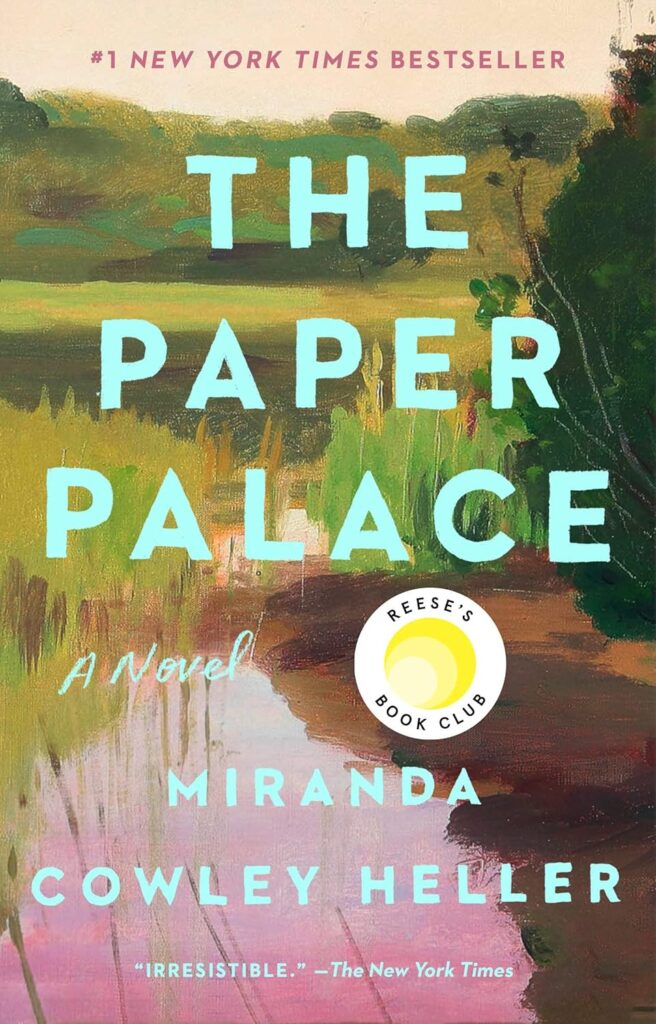
The Paper Palace by Miranda Cowley Heller
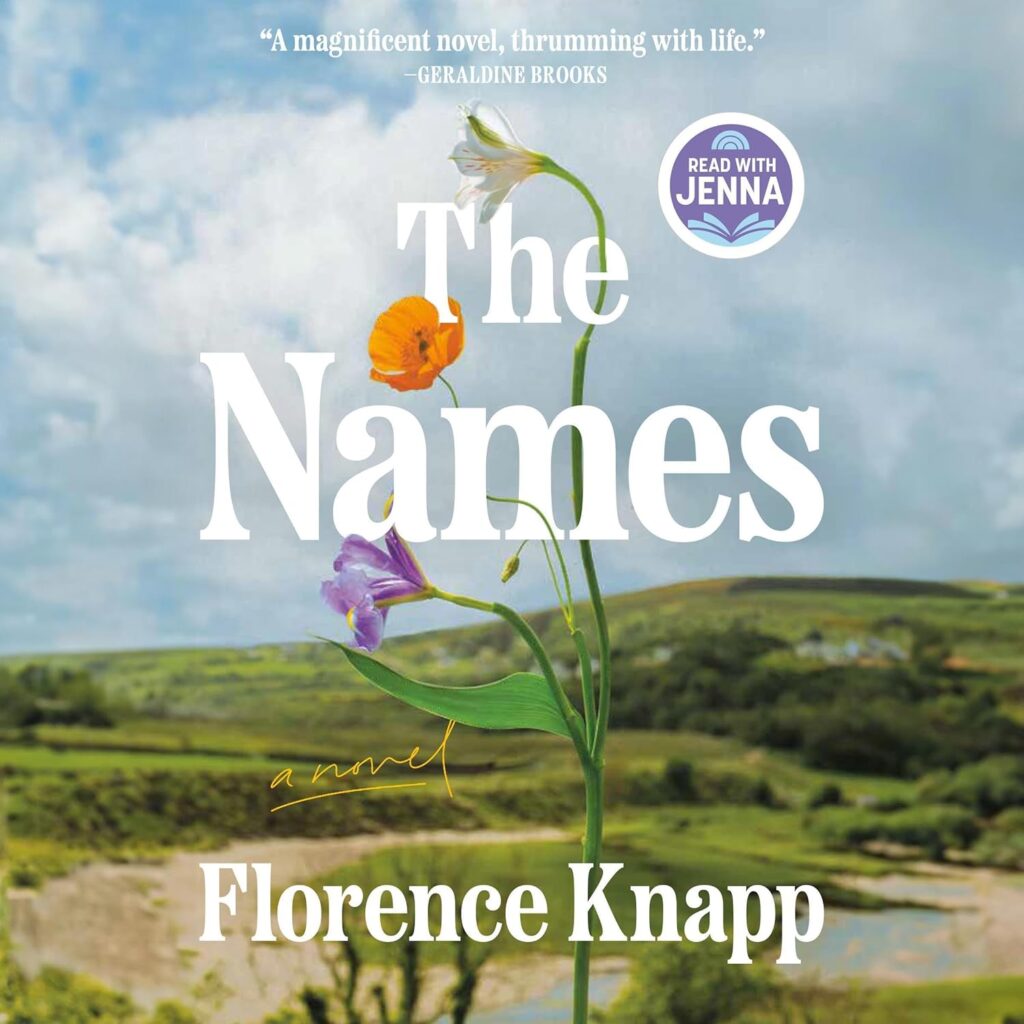
The Names by Florence Knapp
I listened to both of these novels back-to-back in recent weeks. I enjoyed both, but was infuriated by both endings (spoiler alert!). They are inextricably linked for me, because their endings betray the messages they purported to tell.
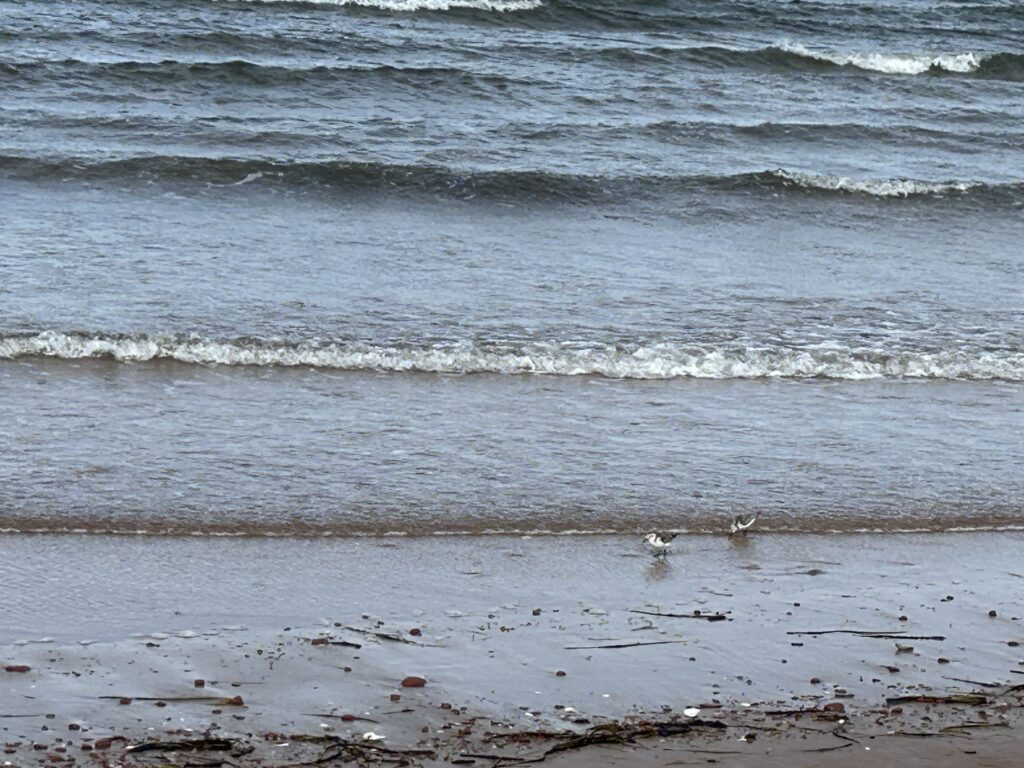
I did my first draft of this blog sitting in a lovely screened-in room in a gorgeous house in Stanhope, PEI. My first real vacation (i.e., no work laptop) since before the pandemic. The house was a 5-minute drive from one of the most gorgeous beaches I’ve ever seen. PEI is officially my new happy place.
Happy images of PEI




The Paper Palace
Immediately on finishing this book, I googled: What just happened? (The ending totally blindsided me.) And is there a sequel? (Sadly, no. I would read it, Miranda, if you wrote it.)
This novel is basically a love triangle. Elle’s mother Wallace inherited a dilapidated but much-loved Cape Cod summer camp, literally made of paper and cardboard glued together. Elle has loved Jonas since she was a teenager; they spent their summers together on Cape Cod. Something defining happens to Elle and Jonas their final summer together, and they become estranged. Elle later meets lovely Brit Peter in London, years later, and they eventually move back to her home of NYC and marry.
After Elle gives birth to her first child, she and Jonas reconcile, and Jonas and his wife become frequent summer guests at the Paper Palace with Elle, Peter, and their family. Including Elle’s very opinionated and quite hateful mother Wallace.
The novel opens with a very-married Elle having just consummated her passionate love with a very-married Jonas at the Paper Palace.
[As an aside, here is my mini-review of Broken Country by Clare Leslie Hall: Don’t. Be. A. Cheater. Or else shit goes down and you’ll be very very sorry.]
The Paper Palace goes on so many tangents about Elle’s life, and I’m not entirely sure they serve any purpose. They’re dramatic and all, but to what end?? Elle did not have a picture perfect childhood. Her mom Wallace is pretty much a laissez-faire mother (that’s a very kind description of a horrible mother) and a narcissist. She defines herself by her relationships with men who are not nice men. Elle is sexually abused by her stepbrother Conrad, but lets Wallace believe the abuser was her stepfather Leo, ending that marriage. Elle’s sister leaves the family, becomes estranged, ill and dies. Elle and her father visit her kindly stepmother’s very kindly parents, the visit marred by a creepy boy with a menacing snake.
Elle and Jonas are teenage friends from summer camp. Elle confides in the younger Jonas about Conrad’s abuse. They are platonic friends, and it never seems to be the right time for them, although there is clearly love between them.
Elle is married to the very good and decent writer Peter. She has a stable life, they are raising their kids in a far more parental manner than she was raised.
And then there’s this fork in the road. Elle consummates her long-lived emotional affair with Jonas at the Paper Palace while her family and Jonas’s wife are visiting. This is very out-of-character for Elle, who values her stable family. Who sees how flawed Wallace was as a mother. Who doesn’t want to be that flawed mother. Is Elle, at the end of the day, really more like her mother than she and the reader had thought?
I fully expected Elle to reaffirm her relationship with Peter. That’s how I thought it was going to end. Family before self. Love before lust.
Why did Elle promise Peter, after he caught Elle kissing Jonas’s hand in a non-sexual, almost maternal way, that Peter was the only man she loved? Why, just hours later, does she take off her ring and presumably choose Jonas? Ruining her family and Jonas’s marriage?
I guess if Elle had chosen to stay with Peter, the whole book would have been meaningless – but no, I actually like that ending better. She and Jonas have this passion and longstanding love, that was briefly a love affair, but she chooses the permanence of Peter, her family – she is the Anti-Wallace. Which I thought was the novel’s point – how we can make choices to not be self-interested, narcissistic, a bad mother and bad wife. How Elle doesn’t have to be like her callous and self-interested mother. How Elle doesn’t have to be like her father, who always chose his horrible wives over her.
Is this book really saying you can never escape your upbringing? That you are damned to repeat the sins of your parents?
I find Elle’s choice at the end out of character for her as a mother and daughter who actively wants to be nothing like her selfish parents.
The Names
Which leads me to The Names, which is on its surface a novel about how a child’s fate is shaped by the name he is given at birth.
But that’s really not the point. In The Names, Cora is married to the pretty horrific Gordon. They already have a daughter Maya, and the novel begins with Cora giving birth to a son. Gordon demands (it’s not up for negotiation) that the son be named, of course, after him.
Three separate timelines (sliding doors) ensue. One, where Cora defies Gordon’s demand and names the son Bear, after Maya’s suggestion. Two, where Cora gives the son her preferred name of Julian. Three, where Cora complies and names the son Gordon.
Bear/Julian/Gordon have three very very different lives, and those lives have a very different impact on Cora, Gordon Sr., and Maya.
I think one of the themes of The Names is that (as I had erroneously suspected the theme of The Paper Palace was) you can indeed escape your upbringing. This is most evident in the Gordon name timeline. Gordon starts out being bullied, like his father, and turns into a selfish, vindictive, and easily manipulated child. No reader will be surprised that he becomes a Finance Bro. He has a car accident and near death experience that scare him straight – choosing a new (artistic) path, a new sobriety, and a newfound defence of his mother. Gordon Jr. ultimately saves his mother from his father’s abuse, blackmailing his father with video he’s taken throughout the house documenting his abuse. Gordon Jr. is testament to the fact that you can escape from the horror of your parents and their relationship and become a better person. Gordon saves himself and his mother.
The other timelines are tangents to me. Cora is nearly killed by Gordon Sr in the Bear timeline – a neighbour intervenes and tries to save her, is killed, and Gordon goes to jail. Cora ends up being alone (well, alone with her friends) for most of her life, guilty over the man who tried to save her and was sacrificed. Maya becomes a homeopath, out and in love. Bear becomes an archeologist and nearly loses his love Lily in a terrorist attack in Paris. Bear dies young, of a wasp sting, leaving a child.
Elle is killed by Gordon Sr. in the Julian timeline, and Julian and Maya are raised by her mother and both turn out, eventually, happy if damaged. Maya is in the closet but ultimately comes out; she studies homeopathy. Julian is an artist and has two children.
Elle stays with Gordon in the Gordon Jr. timeline, ultimately leaves (via the veterinarian whom she ultimately loves in the Bear timeline), but to the reader’s absolute horror and disappointment returns after Gordon Sr. gaslights her and has her declared incapable.
Gordon’s abuse of Cora is horrific in this timeline – controlling and demeaning abuse – such as throwing out her radio, taking the TV remote to work, making her eat out of a bowl on the floor. Maya becomes a doctor and takes her father’s side, while hiding her sexuality from her family and colleagues. Gordon Sr.’s only redeeming moment is when he saves young Gordon from a wasp sting – which is what ultimately kills his son in the Bear timeline. So Cora’s decision to name her son Bear ends with her son’s premature death.
The book’s premise is that a name changes the trajectory of your life; but I think it’s what kind of mother you have that determines much of who you are. Bear is brave and loving because Cora was brave and loving. Julian’s grandmother saves him where she could not save her daughter. Cora’s compliance with Gordon in the Gordon storyline makes Gordon Jr. a horrible person, who only escapes from the Gordon Sr. fate through almost dying and getting new insight.
Florence Knapp is a beautiful writer. I loved this book, but like The Paper Palace, its ending did not resonate.
The novel’s epilogue is told from Gordon Sr.’s perspective, after he suffers the heart attack that will kill him. This is the first time his perspective assumes the narrative. I think he is the Gordon from every timeline – the one who kills, the one who went to jail, the one who was made to leave by Gordon Jr. As Gordon Sr. is dying, he regrets his abuse of Cora and thinks of all the ways it could have been avoided, how he. might never have met her. He sees the error of his ways and dies with remorse.
There is absolutely no way that Gordon has a death bed revelation. Gordon is a manipulator, a narcissist, and a bully. He would have no regret on his death bed because he had no self-awareness, no empathy, no humanity. The epilogue was literally jarring as Gordon Sr.’s voice takes over.
The Paper Palace’s ending suggests you can’t escape your upbringing. The Names says you are the product of your upbringing – but ultimately children (Gordon Jr., Julian and Bear) break free of their father’s legacy and stop the cycle of abuse.
What a betrayal that Gordon Sr. gets the last word. How revolting that Knapp thinks the reader gives a fuck about his fate.